

When people picture a bored cat, they often picture a cat just... lying around. In reality, boredom in cats tends to show up as behavior rather than visible restlessness — because an understimulated cat doesn't just rest more, it often finds its own, less convenient ways to get stimulation.
What boredom actually looks like in cats
Chronic understimulation can show up as:
- Excessive grooming, sometimes to the point of bald patches
- Scratching furniture beyond normal claw maintenance
- Crying, yowling, or pacing, especially at night
- Pouncing on feet, ankles, or hands during the day
- Knocking things off shelves and counters
- Increased or decreased appetite
- General restlessness or, conversely, excessive sleeping
None of these are "bad cat" behaviors — they're a cat's attempt to generate the stimulation their environment isn't providing. That's an important reframe, because it changes the fix from "stopping the behavior" to "meeting the underlying need."
Why indoor life makes this more likely
A cat in the wild spends a large part of its day on activities tied to survival: stalking, hunting, patrolling territory, and reacting to changes in its environment. An indoor cat with a predictable routine, a full food bowl, and the same few rooms every day simply has fewer opportunities for that kind of engagement — even with a loving, attentive owner.
This is also why boredom and weight gain often show up together: a cat that isn't using much mental or physical energy during the day tends to move less overall, which compounds over time.
Rule out a medical cause first
Before assuming a behavior is "just boredom," it's worth a quick gut check — many of the same signs (overgrooming, appetite changes, restlessness, changes in litter box habits) can also point to a medical issue. If a behavior appeared suddenly, is getting worse, or is paired with other symptoms, a vet visit to rule out a medical cause is the right first step, not more toys.
Fixing it: more variety, not necessarily more stuff
The instinct is often to buy more toys, but a pile of toys your cat has already gotten used to won't solve boredom on its own. What tends to work better:
- Rotate, don't accumulate. Put most toys away and rotate 2–3 back into circulation each week. Novelty matters more than quantity.
- Add vertical space. Climbing and perching gives a cat a way to survey its territory, which taps into a different instinct than ground-level play.
- Make meals a mini-activity. Puzzle feeders or scattering food turn a 30-second event into several minutes of problem-solving — see our 15 play ideas for specific setups.
- Keep play sessions short, frequent, and predictable. Two or three sessions a day, ideally before meals, mimic the natural hunt-then-eat rhythm and give your cat something to anticipate.
- Use window access deliberately. A perch near a window with outside activity (birds, people, trees moving in the wind) provides passive stimulation between active play sessions.
Building a routine that sticks
The cats that seem the least "bored" usually aren't the ones with the most toys — they're the ones with the most predictable engagement. A short morning session, a lunchtime puzzle feeder, and an evening play-then-dinner routine does more for a cat's wellbeing than an expensive toy that gets ignored after a week. This is the exact idea behind Catletic's daily missions — small, varied, repeatable activities rather than a one-time purchase.
Boredom in multi-cat households
It's a common assumption that two cats will keep each other entertained, and sometimes they do — but not always. Cats aren't naturally a social species in the way dogs are, and two cats sharing a home doesn't automatically mean they're playing together. If one cat is more dominant over toys, food, or favorite resting spots, the other can end up just as understimulated as a solo cat, sometimes more so if they're also managing social stress. Watch each cat individually rather than assuming the household as a whole is covered, and consider separate feeding and play spaces if one cat seems to be missing out.
Does breed or personality change how much enrichment a cat needs?
Some breeds and individual personalities lean more toward high activity and curiosity — Bengals, Abyssinians, and Siamese are often cited as needing more mental stimulation than average — but the underlying principle applies to every cat, regardless of breed. A naturally low-energy or shy cat still benefits from predictable, gentle engagement; it just might look like quiet puzzle-feeder time rather than energetic chase games. The goal isn't to force a specific activity level, but to make sure every cat has some reliable outlet for natural behaviors like stalking, pouncing, and foraging.
A simple way to tell if your changes are working
Rather than guessing whether a new routine is helping, give it two to three weeks and watch for the behaviors that prompted the change in the first place — are the overnight vocalizations less frequent, is the scratching less intense, has appetite settled back to normal? Small, consistent routines tend to show results gradually rather than overnight, which is part of why tracking streaks or daily missions can be more useful than relying on memory alone.
When to involve your vet
If a behavior change is sudden, severe, or paired with not eating, vomiting, breathing difficulty, or noticeable lethargy, treat that as a reason to contact your vet promptly rather than something to solve with more playtime first.
Sources
- International Cat Care — Playing with your cat
- Cornell Feline Health Center — Feline Behavior Problems: Destructive Behavior
This article is for general information and is not veterinary advice.

Get your cat fit & happy
Daily play missions, an AI body check, and a coach in your pocket.
More on Behavior
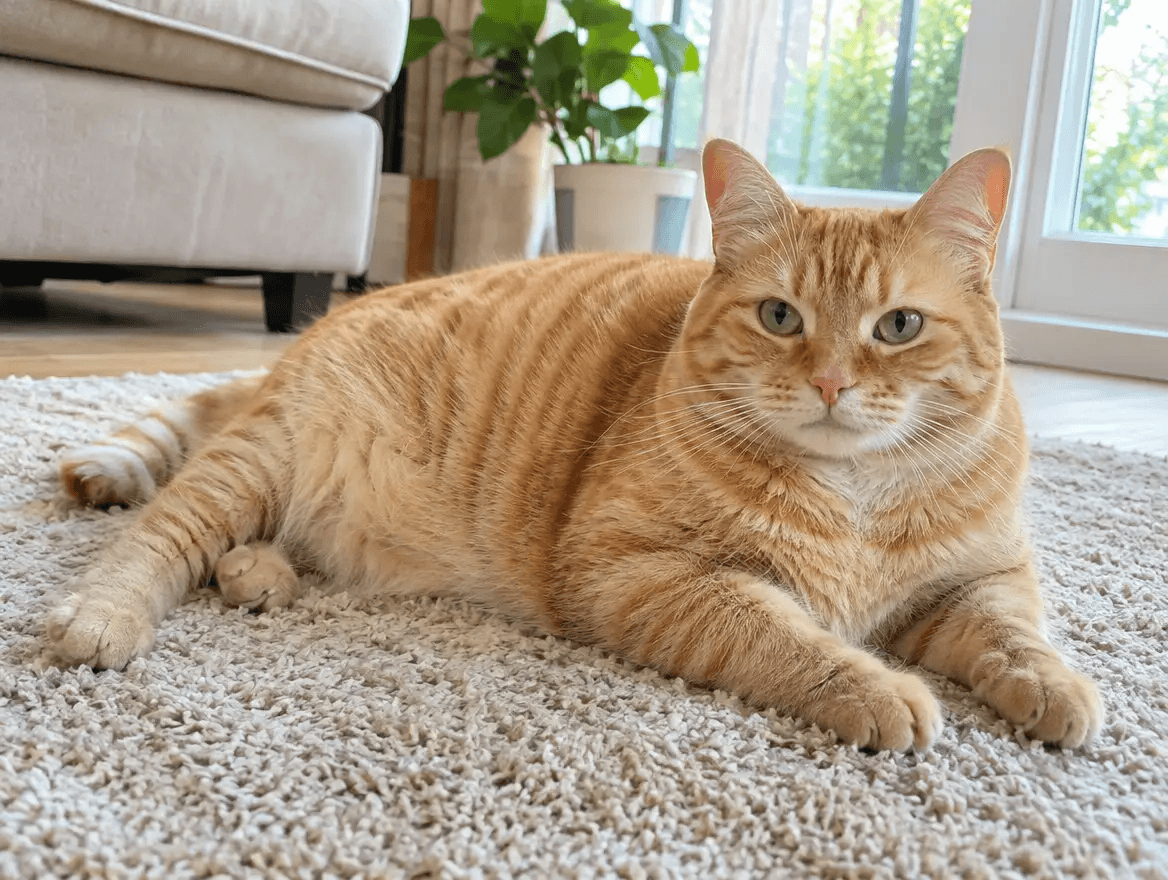
Is My Cat Overweight? Understanding the Body Condition Score
The scale alone doesn't tell the whole story. Here's how vets actually assess a cat's weight — and how to do a simple version at home.
5 min read
How to Help Your Cat Lose Weight Safely
Cat weight loss has to be slow and controlled — doing it too fast can be genuinely dangerous. Here's the gradual approach vets recommend.
4 min read
How Much Exercise Does an Indoor Cat Need?
Indoor cats don't get a daily walk, so it's easy to underestimate how much movement they actually need. Here's a practical, realistic guide.
4 min read