
Is My Cat Overweight? Understanding the Body Condition Score
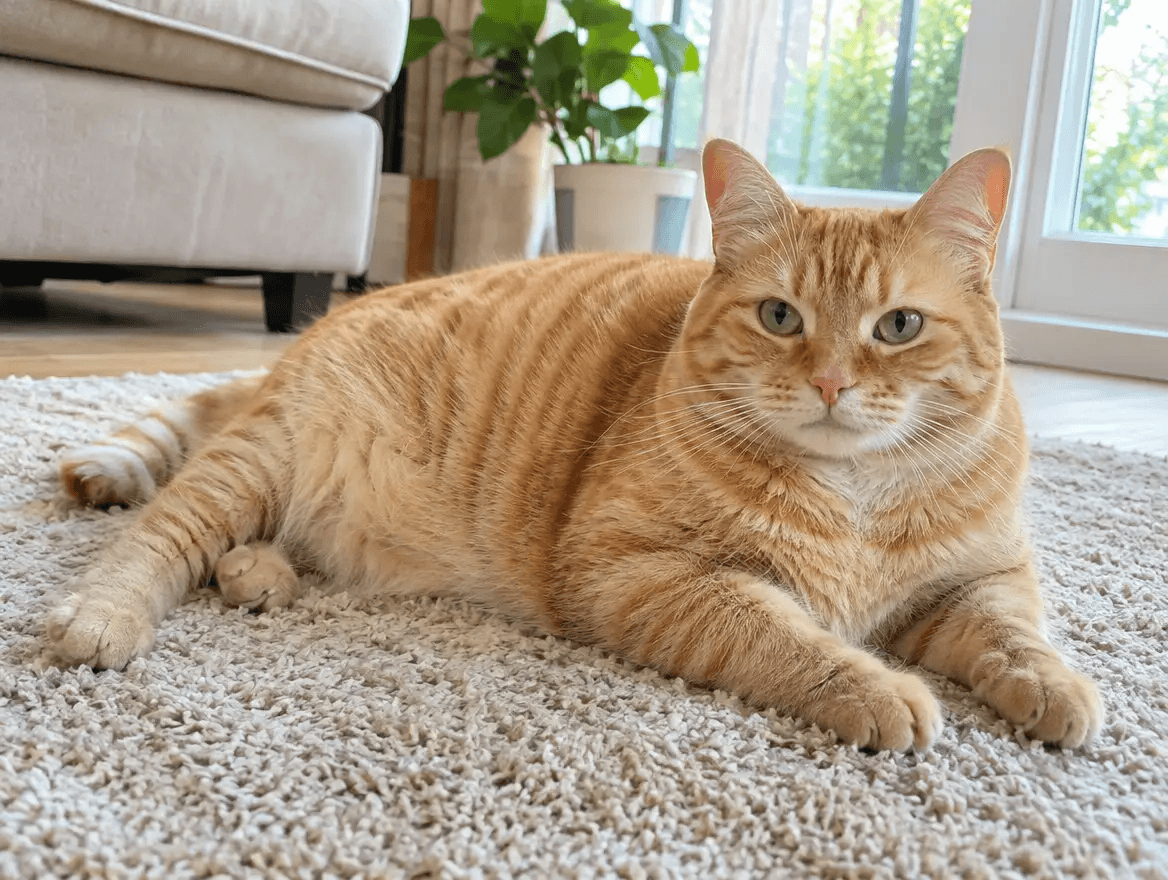
A number on a scale doesn't tell you much on its own — a 5 kg cat could be lean and muscular or carrying extra weight, depending on their frame size, breed, and build. That's why veterinarians don't rely on weight alone. They use something called a Body Condition Score (BCS), which looks at your cat's actual shape rather than just a number.
The good news is that you can learn the basics of this yourself, and it only takes a minute.
What a Body Condition Score actually measures
The most widely used system, developed by the World Small Animal Veterinary Association (WSAVA), scores cats on a 9-point scale, from 1 (severely underweight) to 9 (severely obese), with 5 out of 9 considered ideal for most adult cats. Instead of weighing your cat, you assess three things with your hands and eyes:
- Ribs. Can you easily feel individual ribs with light pressure, without pressing hard? That's the single most useful check.
- Waist. Looking down from above, does your cat have a visible waist behind the ribs, or does their body look like a straight tube — or worse, wider at the belly than the ribs?
- Belly profile. From the side, is there a slight upward tuck behind the ribcage, or does the belly hang low and round?
A simplified 5-point version you can do at home
| What you see and feel | Likely condition |
|---|---|
| Ribs, spine, and hip bones are visible with little to no fat; obvious waist | Too thin |
| Ribs easily felt with slight fat cover; clear waist from above; slight tummy tuck from the side | Lean — this is the target for most cats |
| Ribs felt with moderate pressure; waist is visible but less defined; slight rounding of the belly | Slightly chubby |
| Ribs difficult to feel under fat; little to no waist; rounded belly | Overweight |
| Ribs very hard to feel; no waist; belly sways or hangs; fat deposits on the chest and at the base of the tail | Obese |
If you're landing somewhere in the middle and aren't sure, it's completely normal — this is exactly the kind of judgment call that's easier with a second opinion, whether that's your vet at a routine visit or a quick photo-based check like the one built into the Catletic app.
Why this matters more than the number on a scale
International Cat Care estimates that a significant share of pet cats — some surveys put it around 40–50% in certain populations — are overweight or obese, and the long-term consequences are real: increased risk of diabetes, joint problems, and reduced life expectancy. Cornell's Feline Health Center similarly flags obesity as one of the most common nutritional problems seen in domestic cats.
The flip side matters too — cats that are too thin can be dealing with their own underlying issues, from inadequate nutrition to illness, and shouldn't simply be fed more without understanding why.
What to do with your result
- Lean (ideal): Keep doing what you're doing — consistent portions and regular play.
- Slightly chubby or underweight: Small, gradual adjustments usually help — see our guide on helping your cat lose weight safely for the "gradual, not drastic" approach vets recommend.
- Overweight or obese: This is worth a proper conversation with your vet, who can rule out underlying causes and set a safe target weight and timeline. Rapid weight loss in cats can itself be dangerous, so this isn't something to manage with guesswork.
A word on breed and build
Some breeds are naturally more solid (Maine Coons, for example) or naturally leaner (Siamese and other "oriental" builds), so body condition scoring — which looks at shape and feel rather than a fixed weight number — is far more reliable across different cats than comparing raw kilograms to a generic chart.
How often should you check?
A body condition check is quick enough to do monthly, but the real value comes from tracking the trend over time rather than any single check. A cat that's "lean" one month and drifts toward "slightly chubby" over the next three is much easier to correct early than one that's only assessed once a year at an annual checkup. Pairing a monthly hands-on check with a more frequent weigh-in — even a rough one on a kitchen scale, cat carrier included then subtracted — gives you an early warning system that a once-a-year number on its own can't.
Common mistakes when assessing body condition
- Judging by face or legs alone. A cat's face and lower legs often stay proportionally slim even when the body is carrying significant extra weight, which can make an overweight cat look "normal" at a glance.
- Going by weight alone, with no context. Without knowing a cat's frame size and breed tendencies, a weight number alone can be misleading in either direction.
- Checking through thick fur without using your hands. Long or dense coats can visually hide a thin or heavy body underneath — this is exactly why the hands-on rib check matters more than the visual impression.
- Only checking once. A single check tells you where your cat is today; checking periodically tells you where they're heading, which is the more useful information.
When to involve your vet directly
Body condition scoring is a useful at-home habit, but it isn't a diagnosis. If your cat has gained or lost weight suddenly, has stopped eating, is vomiting, seems unusually lethargic, or is having any difficulty breathing, contact your vet promptly rather than waiting to reassess at your cat's next checkup.
Sources
- WSAVA Global Nutrition Guidelines
- International Cat Care — Obesity in cats
- Cornell Feline Health Center — Purrfect Weight app
This article is for general information and is not veterinary advice.

Get your cat fit & happy
Daily play missions, an AI body check, and a coach in your pocket.
More on Weight & Nutrition

How to Help Your Cat Lose Weight Safely
Cat weight loss has to be slow and controlled — doing it too fast can be genuinely dangerous. Here's the gradual approach vets recommend.
4 min read
How Much Exercise Does an Indoor Cat Need?
Indoor cats don't get a daily walk, so it's easy to underestimate how much movement they actually need. Here's a practical, realistic guide.
4 min read
15 Play Ideas to Keep Your Cat Active at Home
No yard, no problem. Fifteen simple ways to get your cat moving, hunting, and genuinely tired — using things you probably already own.
5 min read